Hawaiian fusion cuisine is a vibrant mix of local seafood and global influences, shaped by the islands' history and diverse cultures. From Japanese sashimi to Peruvian tiradito, chefs on Maui are blending techniques and flavors to create dishes that highlight the islands' rich heritage and fresh ingredients. Here’s a quick look at the key trends:
- Japanese & Pan-Asian Fusion: Techniques like panko-crusting and fish-aging elevate local catches like ahi tuna and onaga. Bold umami flavors from ingredients like dashi and miso shine in dishes at spots like Sansei and KOMO.
- Latin American Fusion: Peruvian tiradito and Mexican aguachile pair Hawaiian seafood with tangy citrus and spicy elements. Restaurants like Humuhumunukunukuāpuaʻa add a local twist with Hawaiian chili pepper water.
- Mediterranean Fusion: Simple preparations like grilling and searing, combined with olive oil and herbs, showcase the natural quality of fish like monchong and kampachi. Nick's Fishmarket Maui offers standout options like saffron seafood paella.
- Classic Hawaiian Dishes: Techniques like laulau and imu cooking preserve the essence of Hawaiian culinary traditions, focusing on local fish like opakapaka and mahi-mahi.
Each style brings a unique perspective to Hawaiian seafood, balancing global techniques with respect for local ingredients and practices.
1. Japanese and Pan-Asian Fusion with Hawaiian Seafood
Hawaiian seafood fusion owes much of its roots to the plantation era, where Japanese and Pan-Asian traditions became intertwined with local culinary practices. Over time, this blend has evolved into some of the most refined seafood techniques found in the Pacific.
Cooking Techniques
Chefs in Hawaii have taken traditional sushi methods to new heights. One standout technique is panko-crusting, where local ahi tuna is coated in Japanese breadcrumbs to achieve a crispy crust while preserving the sashimi-grade interior. At Sansei Seafood Restaurant & Sushi Bar in Kapalua, the Panko-Crusted Ahi Sashimi Roll has become a signature dish, earning accolades from publications like Wine Spectator, Zagat, and Bon Appétit. Meanwhile, at KOMO in the Four Seasons Resort Maui at Wailea, chefs employ traditional fish-aging techniques to deepen the umami flavors before crafting their nigiri.
Smoking has also become a popular method, adding bold, layered flavors. Chef Matt Dela Cruz of Kō Restaurant explains:
"I love playing with smoke as a flavoring component, like smoked butter or smoked soy, because it adds a depth of flavor that really heightens the umami." - Matt Dela Cruz, Executive Chef, Kō Restaurant
These approaches allow chefs to create dishes that are both technically sophisticated and rich in flavor.
Flavor Profiles
Pan-Asian fusion often introduces bold, fermented flavors to enhance the natural taste of fish. Ingredients like gochujang glazes, dashi-infused soy, and dry miso bring a new dimension to the table. At Nobu Grand Wailea, Chef Nobu Matsuhisa has shown interest in using dry miso and tiradito-style techniques with local onaga (longtail red snapper). He notes:
"It's called onaga. It's a great tender whitefish. I want to try tiraditos with it and also a sashimi with dry miso."
At KOMO, the house-made dipping sauce - a blend of three soy varieties and dashi - replaces standard condiments, creating a more thoughtful and intentional flavor experience. These innovative combinations result in dishes that are as complex as they are satisfying.
Presentation Styles
The influence of Japanese minimalism is evident in the way these dishes are presented. At KOMO, Executive Chef Kiyokuni "Kiyo" Ikeda focuses on simplicity:
"Whichever fish arrives, it's prepared simply and with minimal garnish... the precision in timing and technique unlocks something completely different." - Kiyokuni "Kiyo" Ikeda, Executive Chef, Komo
One unique touch at KOMO is the tableside preparation of wasabi, grated on sharkskin to create a smooth paste that enhances the meal. In contrast, Nobu Grand Wailea offers an 8-course Omakase experience, guiding diners through a carefully curated progression of flavors and artful plating.
Use of Local Seafood
Sustainability and local sourcing play a key role in this culinary style. At Seascape at Maui Ocean Center, which earned a Tripadvisor 2025 Travelers' Choice Award and ranks in the top 10% worldwide, the seafood is sourced daily from nearby Māʻalaea Harbor to ensure both freshness and sustainability. KOMO complements its shipments from Tokyo's Toyosu Market with Maui-grown produce. These practices emphasize the natural bounty of Hawaii's waters, using Japanese techniques to highlight - not overshadow - the quality of local ingredients.
2. Latin American Fusion with Hawaiian Seafood
Latin American culinary traditions have seamlessly blended with Hawaii's seafood offerings, thanks to their shared love for fresh and vibrant flavors. While Pan-Asian fusion often emphasizes umami, Latin fusion brings a bold mix of tangy and spicy elements, creating a style that's both refreshing and dynamic.
Cooking Techniques
A standout technique from Latin America that's found its way into Hawaiian cuisine is the Peruvian tiradito - thinly sliced raw fish dressed with sauce just before serving. At Humuhumunukunukuāpuaʻa in the Grand Wailea, this method is applied to local fish, pairing delicate textures with zesty, acid-forward sauces that enhance the seafood's natural flavors. The use of native kiawe wood for charring and smoking adds a distinct Hawaiian touch to grilled dishes. For example, charred octopus is paired with an aji amarillo vinaigrette, balancing smoky richness with the bright heat of Peruvian yellow chili. This approach highlights the fusion's focus on acidity and bold flavors that transform Hawaiian seafood.
Flavor Profiles
Latin fusion sets itself apart with its emphasis on acidity and layered spice rather than soy-based umami. Citrus flavors like lime, blood orange, and tangelo bring brightness, while chilies such as aji amarillo and salsa macha add depth. A Hawaiian twist comes with the use of local chili pepper water. At Humuhumunukunukuāpuaʻa, the ahi aguachile incorporates this ingredient alongside orange, creating a unique regional spin on the traditional lime-and-chili base.
Chef Matt Dela Cruz from Kō Restaurant shares his personal connection to this approach:
"Hawaiian chili pepper water is another one that's deeply personal. My dad would mix chili pepper water with soy and calamansi, that's what we'd dip our fish in... When I put my twist on that, I turn it into a composed vinaigrette that presents beautifully on the plate." - Matt Dela Cruz, Executive Chef, Kō Restaurant
Presentation Styles
Latin-Hawaiian fusion dishes are as visually striking as they are flavorful. Bright sauces, fresh herbs, and contrasting textures make these dishes pop. Think crunchy elements like jicama, radish, and cucumber paired with tropical fruits such as pineapple and lilikoi (passion fruit). At Humuhumunukunukuāpuaʻa, their Seafood Towers - offered in Petite, Grande, and Royale sizes - feature ahi and scallop ceviche, turning the meal into a shared celebration.
Use of Local Seafood
Hawaii's local seafood pairs beautifully with Latin-inspired techniques. Here's how some Maui restaurants incorporate these flavors:
| Seafood | Latin Technique | Key Flavor Elements |
|---|---|---|
| Onaga (Red Snapper) | Tiradito (Peruvian-style) | Delicate texture, dry miso |
| Ahi Tuna | Aguachile | Hawaiian chili pepper water, orange, avocado mousse |
| Pacific Snapper | Salsa macha | Piquillo pepper vinaigrette |
| Kampachi | Nigiri-style | Aji amarillo, tangelo preserve |
| Octopus | Charred, Latin-grilled | Aji amarillo vinaigrette, jicama apple slaw |
At Lima Cocina + Cantina, Chef Gustavo has introduced a ceviche bar concept in Maui, featuring daily-caught fish like ono, mahi-mahi, ahi, and kampachi. Prepared in traditional Peruvian styles, the menu offers something for everyone. During happy hour, you can enjoy oysters for $4 each and fried calamari for $5, making these fusion dishes accessible at a range of price points.
For those eager to explore these creative fusion dishes along Maui's coast, the Maui Oceanfront Dining Directory 2026 provides up-to-date listings of oceanfront dining options.
3. Mediterranean Fusion with Hawaiian Seafood
Mediterranean cuisine naturally connects with Hawaiian cooking, as both regions share similar climates. Sergio Caceres, Director of Operations at Mauna Lani, explains:
"Because of the similar climates, many ingredients found in Mediterranean cuisine can be grown in Hawaiʻi."
This shared foundation allows Mediterranean and Hawaiian flavors to blend effortlessly, creating dishes that feel authentic and inspired. This harmony is particularly evident in how Mediterranean techniques are adapted to showcase the unique qualities of Hawaiian seafood.
Cooking Techniques
Mediterranean cooking styles like charring, searing, and citrus-based methods work beautifully with Hawaiian seafood. For example, dishes like grilled Spanish octopus ($33) and whole Kona kampachi highlight the freshness of local fish through simple, hearth-to-table techniques. At Nick's Fishmarket Maui, seared ahi is paired with risotto made from Hamakua mushrooms, combining a traditional Italian base with locally sourced ingredients. The restaurant's Mediterranean-inspired seafood program has even earned Wine Spectator's "Best of Award of Excellence".
These cooking methods don’t just enhance flavor - they also introduce a global perspective to the local seafood scene, blending tradition with innovation.
Flavor Profiles
Mediterranean fusion in Hawaii leans into olive oil, fresh herbs, and citrus for its flavor foundation. However, traditional Mediterranean ingredients are often replaced with Hawaiian alternatives. For instance, lilikoi mignonette offers a tropical twist on the classic vinegar-based condiment for fresh oysters, while blood orange mignonette adds a bright, fruity note to raw dishes. Rich cheeses like goat cheese, burrata, and Parmigiano Reggiano lend depth to dishes such as seared diver scallops served with goat cheese tortellini at Nick's Fishmarket Maui.
At Olivine, located in the Grand Wailea, the focus shifts to coastal Italian flavors paired with Hawaiian ingredients. As the restaurant describes:
"Olivine is a celebration of earth's renewal, featuring handmade pastas and seasonal dishes that infuse local Hawaiian ingredients with authentic Italian flavors." - Grand Wailea
This approach highlights how Mediterranean fusion can evolve while staying true to its roots.
Presentation Styles
The presentation of Mediterranean-Hawaiian dishes is as striking as their flavors. A saffron-based seafood paella featuring monchong, shrimp, mussels, and clams ($76) creates a bold visual centerpiece, while whole Kona kampachi is plated with vibrant salsa verde and charred lemon for added flair. Rustic pōhaku bowls, inspired by Hawaiian natural elements, are used for dips like hummus topped with spicy 'nduja and lemon olive oil, merging Greek and Hawaiian aesthetics.
Use of Local Seafood
| Mediterranean Element | Hawaiian Seafood | Dish Example |
|---|---|---|
| Lilikoi mignonette | Fresh oysters | Fresh Oysters with Lilikoi Mignonette |
| Goat cheese tortellini | Diver scallops | Seared Diver Scallops with Goat Cheese Tortellini |
| Saffron paella base | Monchong, shrimp, mussels, clams | Seafood Paella ($76) |
| Salsa verde + charred lemon | Kona kampachi | Whole Kona Kampachi (market price) |
| Risotto | Ahi tuna | Pan-Seared Ahi over Hamakua Mushroom Risotto |
This fusion of Mediterranean techniques and Hawaiian ingredients delivers a dining experience that feels both familiar and refreshingly new, celebrating the best of both culinary worlds.
sbb-itb-dfba65a
4. Classic Hawaiian Seafood Dishes
Hawaiian seafood traditions carry the essence of Polynesian heritage and influences from plantation-era cooking. While modern fusion cuisine often reimagines these flavors, the core techniques and principles of classic Hawaiian seafood remain deeply respected.
Cooking Techniques
Two cornerstone methods in Hawaiian seafood cooking are laulau and imu. Laulau involves wrapping fish in taro leaves (known as lu'au) and steaming it gently, resulting in tender, flavorful fish infused with the earthy aroma of the leaves. The imu, an underground pit oven filled with hot stones and covered with vegetation, imparts a rich smokiness that stovetop cooking simply can't replicate. These time-honored techniques set the foundation for the bold yet balanced flavors that define Hawaiian seafood.
Flavor Profiles
Hawaiian seafood dishes are all about harmony. The clean spice of Hawaiian chile water (a simple blend of chili peppers, water, and salt), the tangy brightness of lilikoi (passion fruit) and calamansi, and the rich complexity of local sea salts like Alaea all play pivotal roles. For example, at Kō at Fairmont Kea Lani, Chef Dela Cruz transforms his father's traditional chili pepper water and calamansi dip into a modern vinaigrette, showcasing what some call modernist traditionalism.
Presentation Styles
The Seafood Tower, featuring fresh crab, oysters, and lobster, is a classic example of Hawaiian seafood presentation. It emphasizes the natural quality of the ingredients, allowing the freshness of the catch to take center stage. While fusion cuisine often pushes creative boundaries, classic presentations stick to tradition, celebrating the authentic flavors and heritage of Hawaiian cooking. Even in refined settings, the influence of the plate lunch - a staple of Hawaiian comfort food - remains evident.
Use of Local Seafood
Traditional Hawaiian seafood revolves around iconic species like 'Ahi, Opakapaka, Mahimahi, Opah, and Spiny Lobster. These fish are not just chosen for their taste but also for their cultural importance, making them staples in both classic and modern dishes. At Nick's Fishmarket Maui, Chef Maka personally sources fish directly from local fishermen, ensuring the freshest catches, such as opakapaka, make it to the menu. Similarly, at Mina's Fish House, James Beard Award–winning Chef Michael Mina follows a line-to-table approach, where the daily catch goes straight from the boat to the kitchen. This direct connection between fishermen and chefs keeps the tradition of Hawaiian seafood cooking grounded and authentic.
Pros and Cons of Each Fusion Style
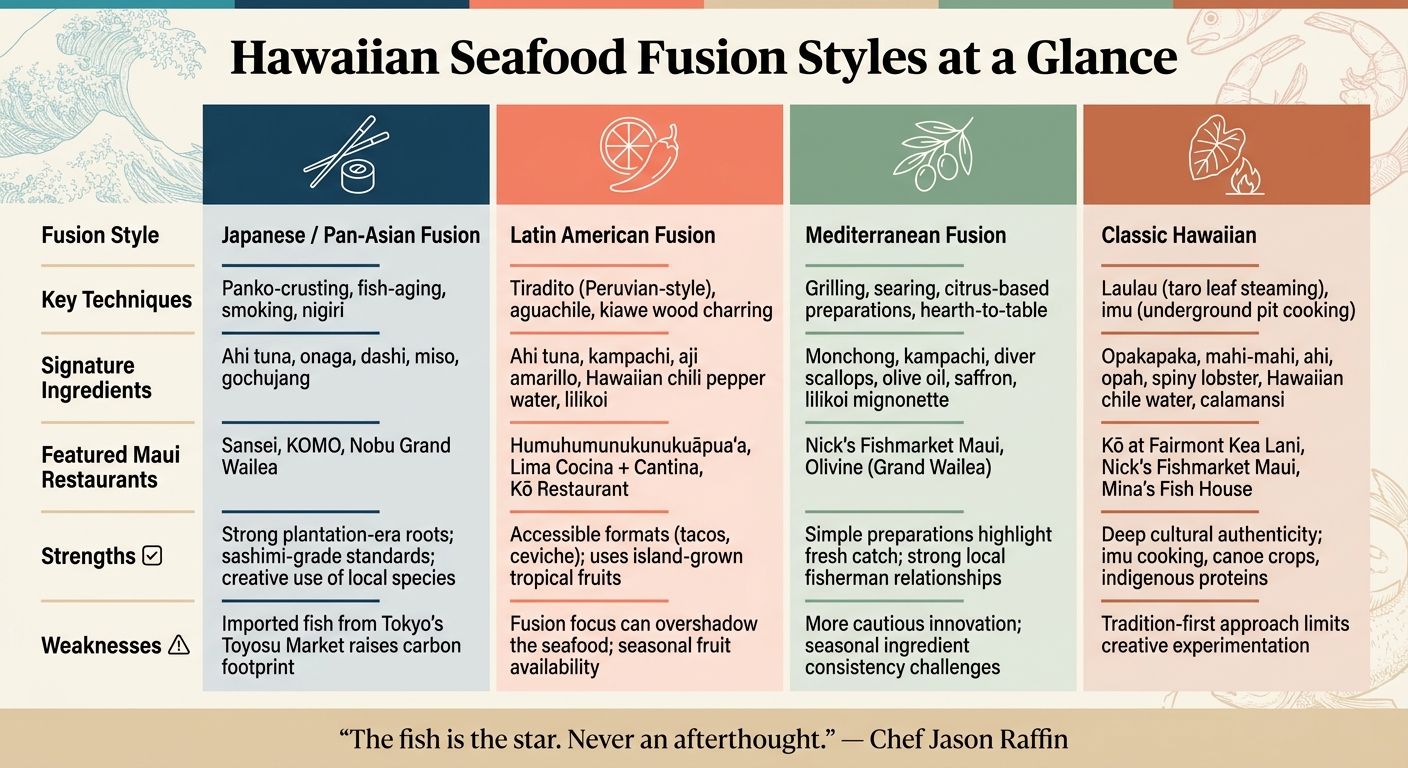
Hawaiian Seafood Fusion Styles: Pros, Cons & Key Traits
After diving into the techniques and flavors of each fusion style, it's time to weigh their strengths and limitations. Each approach brings its own balance of creativity, respect for tradition, and practical sourcing challenges. Here's how they stack up:
| Fusion Style | Strengths | Weaknesses |
|---|---|---|
| Japanese / Pan-Asian | Strong ties to Hawaii's plantation history; upholds high sashimi-grade standards; creatively incorporates local species like Ahi and Onaga | Reliance on imported fish from Tokyo's Toyosu Market increases carbon footprint, with some restaurants flying in shipments twice a week |
| Latin American | User-friendly formats like tacos and ceviche make seafood approachable; uses island-grown tropical fruits to minimize food miles | The fusion focus can sometimes overshadow the seafood itself; tropical fruit availability depends on the season |
| Mediterranean | Simple, refined preparations that emphasize the natural quality of fresh catch; fosters long-term relationships with local fishermen | Innovation tends to be more cautious; maintaining high culinary standards with seasonal ingredients can be tricky |
| Classic Hawaiian | Deeply rooted in tradition; highlights cultural authenticity through imu cooking, canoe crops, and indigenous proteins | Prioritizes tradition over experimentation, which limits creative innovation |
Chef Roy Yamaguchi, the founder of Roy's, encapsulates the essence of fusion cooking with his philosophy:
"Always take care of your customers... your style comes from yourself and your experiences, but you cook for other people too, not just yourself."
This mindset - blending personal history with the guest's experience - is why Pan-Asian fusion feels so at home in Hawaii. However, sourcing challenges, such as reliance on imports from Japan, can complicate sustainability for some Maui-based restaurants.
Latin American fusion thrives on its creative and accessible approach, though it sometimes struggles to balance innovation with respecting Hawaiian culinary roots. Meanwhile, Mediterranean fusion stands out for its commitment to sourcing integrity. Many restaurants build strong supplier networks, sourcing from Kauai shrimp farms, Big Island goat dairies, and Oahu organic produce. A helpful tip: menus that specify the origin of ingredients, like "Kauai Shrimp" or "Kona Abalone", often signal a greater focus on local sourcing.
Across all four styles, the "beach-to-table" philosophy is a unifying thread. For these chefs, sourcing isn't just about convenience - it's a way to honor the ingredients and the islands themselves. This comparison highlights how each fusion style reimagines traditional Hawaiian seafood with a global twist.
Conclusion
Hawaiian seafood - like ahi, onaga, and mahi-mahi - serves as a cornerstone of modern American cuisine. Known for its mild, clean flavors, it adapts beautifully to a variety of culinary techniques from around the world. Whether it’s a Japanese miso glaze, a Peruvian citrus cure, or a Mediterranean wine reduction, these dishes maintain their essence while embracing global influences. As Chef Jason Raffin aptly puts it: "The fish is the star. Never an afterthought."
What sets Maui's fusion cuisine apart is how history shapes every dish. Rooted in the plantation-era blending of Filipino, Portuguese, Korean, Japanese, and Chinese traditions, Maui’s culinary culture honors its past while inspiring modern chefs to create bold new pairings. This rich heritage continues to shine in the island’s top restaurants.
At the same time, the focus on responsible practices is reshaping the dining scene. Sustainability is no longer just an ideal - it's becoming a standard. Many restaurants now work closely with local fishermen at harbors like Māʻalaea, source canoe crops, and aim for certifications such as the Platinum "Ocean Friendly" designation, which Seascape at Maui Ocean Center has achieved. This commitment not only supports the environment but also ensures fresher, higher-quality dishes.
Maui’s food culture is also navigating recovery and growth. The reopening of the Lahaina Small Boat Harbor in December 2025 has restored a vital link in the local seafood supply chain, benefiting fishing families and the restaurants that depend on their daily catch. This recovery is crucial, as tourism supports about 75% of jobs on Maui, and the island’s vibrant food scene remains a key attraction for visitors and a source of pride for locals.
For those looking to explore Maui’s oceanfront dining, the Maui Oceanfront Dining Directory 2026 is an invaluable resource. It offers a curated list of verified restaurants, complete with details on cuisine, hours, and amenities, helping diners navigate the ever-evolving culinary landscape.
FAQs
How can I tell if a restaurant is using truly local seafood?
Identifying authentic local seafood in Hawaii can be a bit challenging since restaurants there don't have to follow federal country-of-origin labeling rules. To find places that serve locally sourced seafood, keep an eye out for venues that showcase partnerships with local fishermen or offer seasonal "fresh catch" menus. Many restaurants that prioritize local sourcing proudly mention their suppliers. If you're dining at a sushi bar or a high-end restaurant, don’t hesitate to ask the chef directly - those who use local seafood are often excited to talk about their sources.
What are the best fusion options if I don’t eat raw fish?
If raw fish isn’t your thing, fusion cuisine offers plenty of delicious alternatives with cooked dishes. For instance, you can explore Japanese-Peruvian creations like the black cod with miso at Nobu Grand Wailea. Craving something more rooted in local traditions? Check out Kō, where Plantation-inspired dishes bring together Filipino, Portuguese, and other comforting flavors. Thai fusion is another fantastic option - Maui Thai Bistro serves up dishes like macadamia nut short ribs or kiawe-smoked ribeye, combining bold global tastes without the need for raw seafood.
What does “ocean-friendly” or sustainable seafood mean in Maui?
In Maui, the term "ocean-friendly" seafood refers to options that help safeguard marine life and habitats. This typically means choosing seafood that is locally sourced, responsibly caught, and aligns with guidelines such as Seafood Watch’s “Best Choice” or “Good Alternative” ratings.
Many restaurants participating in Ocean Friendly programs go a step further by minimizing ocean pollution and cutting down on plastic waste. This way, your meal not only tastes great but also supports healthier marine ecosystems.