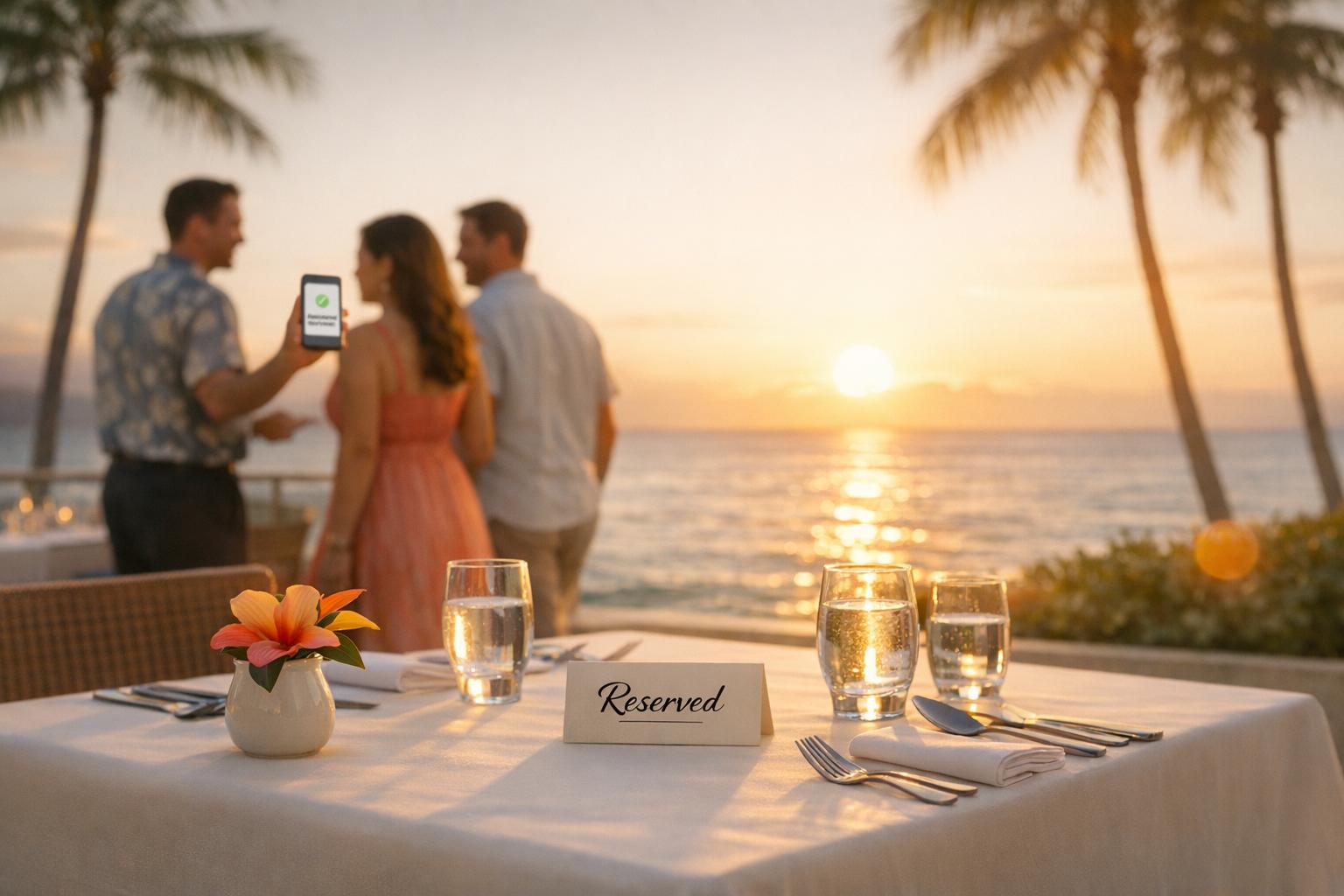
Oceanfront dining stands out because it combines natural beauty, sensory experiences, and thoughtful design. Here’s why it feels so special:
- Scenic Views: Constantly changing ocean horizons, from sunrises to sunsets, create a dynamic and calming backdrop.
- Natural Sounds: The rhythmic crash of waves and coastal breezes enhance relaxation and even influence how food tastes.
- Coastal-Inspired Design: Materials like driftwood, sea glass, and sandy tones connect the dining space to the shoreline.
- Local Ingredients: Menus often feature seafood and produce sourced nearby, making meals feel tied to the location.
- Atmosphere and Service: Restaurants blend open layouts, warm lighting, and personalized service to create a welcoming, unhurried experience.
Whether it’s the sights, sounds, or flavors, every detail works together to make Maui oceanfront dining a memorable escape.
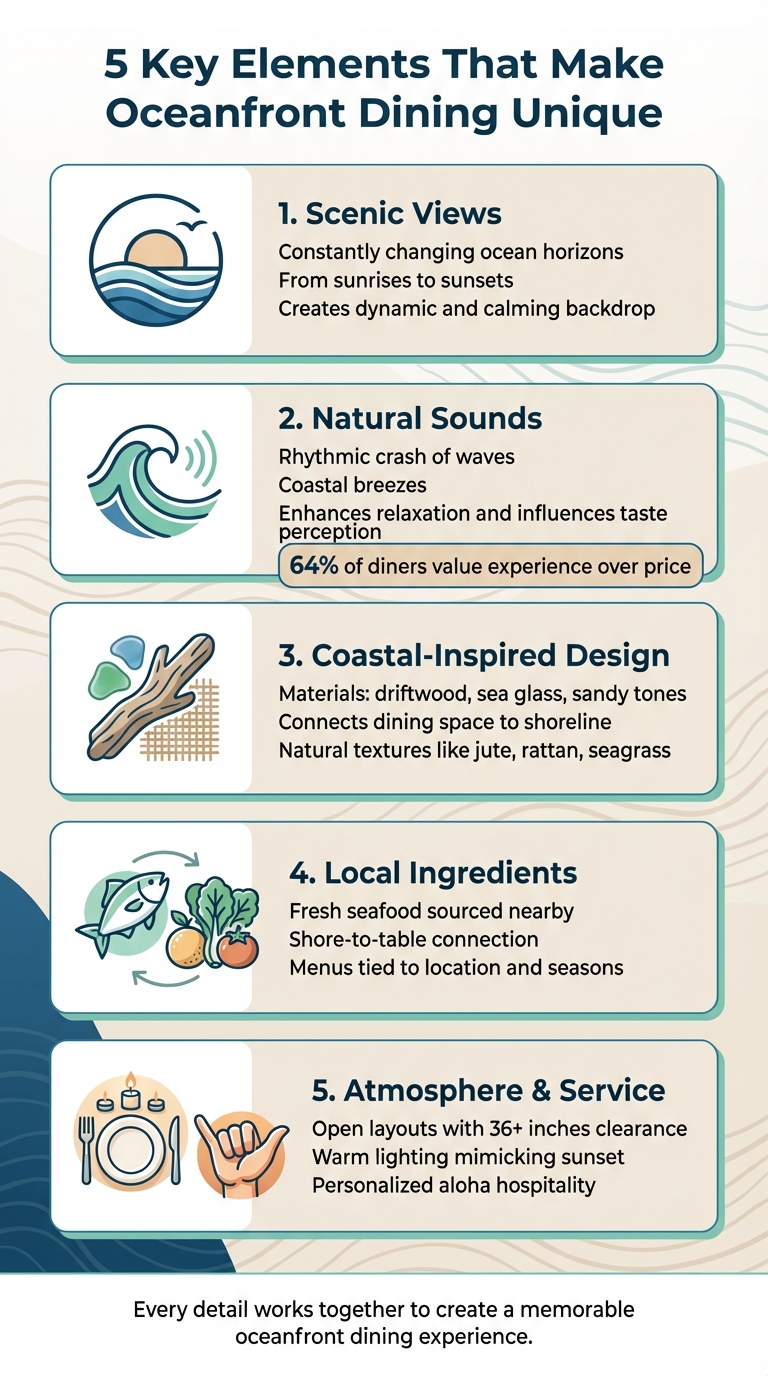
5 Key Elements That Make Oceanfront Dining Unique
How Scenic Views Create Atmosphere
Clear Ocean Views
There’s something about a sweeping ocean view that transforms dining into an experience that feels almost timeless. The rhythm of the ocean becomes part of your meal, making the scenery much more than just a backdrop. Picture sitting at a table with the horizon stretching endlessly before you. From the first light of morning to the soft hues of sunset, the view is constantly changing, adding a dynamic element to your time at the table.
This connection to nature has a calming effect. Your eyes are naturally drawn to the horizon, encouraging a sense of relaxation and slower, more mindful dining. Instead of rushing through your meal, you find yourself savoring each bite and enjoying unhurried conversations. Take Sea House Restaurant on Napili Bay, for example. As a 2025 finalist in the "Best of Maui" contest for Waterfront Dining, it takes full advantage of its location, offering diners breathtaking sunrise and sunset views that set a tranquil tone.
Pairing uninterrupted ocean views with seafood or island-inspired dishes elevates the experience even further. The flavors on your plate feel like an extension of the scenery, creating a harmony between what you taste and what you see. Thoughtful design ensures the views remain center stage, enhancing the overall sensory experience.
Building Features for Better Views
Great views don’t happen by accident - they’re often the result of careful design choices. Restaurants that embrace their natural surroundings use architecture to frame and enhance the scenery. Mala Ocean Tavern in Lahaina, the 2025 "Best of Maui" winner for Waterfront Dining, is a perfect example. Its open-air layout ensures guests enjoy uninterrupted views of Maui’s stunning shoreline, no matter the time of day.
Features like large windows, open terraces, and well-planned seating arrangements keep the ocean as the focal point. Some spaces even add nautical touches like circular porthole windows or exposed wooden beams, which bring in natural light and amplify the maritime vibe. Star Noodle, another 2025 finalist for Waterfront Dining, uses its open design and scenic backdrop to complement its modern Hawaiian- and Asian-inspired menu, creating a setting that feels uniquely tied to its location.
Smart orientation also plays a role. Many restaurants position themselves to capture golden hour - those magical moments at sunrise and sunset when the light is at its most dramatic. Indoors, adjustable lighting systems reduce glare at night, while warm amber lighting mimics the soft glow of sunlight reflecting off the water, ensuring the views remain just as captivating after dark.
sbb-itb-dfba65a
Natural Sounds and Their Effect
The Calming Sound of Waves
Beyond the stunning views, the sounds of the ocean play a huge role in shaping the dining experience. The rhythmic ebb and flow of waves create a soothing atmosphere, almost meditative, that encourages diners to unwind and take their time. Interestingly, research highlights that 64% of full-service diners value the overall experience more than the price of the meal. Sound also has a surprising influence on how we perceive flavors - higher-pitched sounds can make sauces taste brighter, while deeper tones enhance the richness of flavors. For seafood, the natural bass notes of the ocean amplify its briny freshness, creating a deeper connection between the food and the setting.
"The gentle lapping of waves and the distant call of seagulls create a natural soundscape that is both relaxing and enchanting." - Kokomo's Restaurant
Some restaurants even take things a step further by using audio systems that play short, tailored sound cues - lasting 60 to 90 seconds - when specific dishes are served. However, the simplest and often most effective approach is letting the ocean's natural soundtrack shine, free from overpowering background music. Sound is considered the second most impactful sensory element in restaurant design, right after visuals. When managed thoughtfully, it elevates the entire experience.
This natural soundscape naturally blends into other coastal sounds, adding even more depth to the atmosphere.
Other Coastal Sounds
Coastal dining isn’t just about the waves; it’s enriched by the rustling of palm leaves, the occasional calls of seagulls, and the soft whispers of wind skimming across the water. These layers of sound create a multi-dimensional experience that feels immersive and unforgettable.
"The beauty of the surrounding water, the soundscape of wind and surf, and the shared delight in a memorable meal all serve to bring people closer." - Kokomo's Restaurant
To preserve this ambiance, it’s crucial to maintain sound levels that allow these natural elements to stand out. Thoughtful seating arrangements, like high-backed booths or varied layouts, can act as sound barriers, keeping conversations private while allowing the coastal soundtrack to flow through. When done right, this setup fosters relaxed conversations without the need to raise your voice, enhancing the overall sense of calm and connection.
The Waterfront Dining Experience That Keeps Us Coming Back
Design Elements That Reflect the Coast
Drawing inspiration from the ocean's ever-shifting beauty, certain design elements help bring the coastal ambiance to life. From the materials used to the layout of the space, these choices create an environment that feels deeply connected to the sea.
Natural Materials and Beach-Inspired Decor
Oceanfront restaurants often incorporate natural materials to echo the beach's textures and tones. Weathered wood, driftwood, and sea glass are more than decorative - they're often integrated into furniture and functional pieces. Woven fibers like jute, seagrass, and rattan bring a rustic touch, adding warmth and texture.
The color palette typically mirrors the coastal surroundings. Shades like sandy beige, weathered gray, and sea green are paired with crisp white, reflecting the natural hues of the shore. Blue and sea-green tinted glassware, along with pendant lights, mimic the clarity of ocean water. Subtle accents, like mother-of-pearl, add a shimmering, light-catching detail. Durable materials such as Grade-A teak and Marine Grade Polymer (MGP) are often chosen for their ability to withstand the harsh coastal environment while adding character to the space.
Décor is kept minimal and low-profile to ensure unobstructed views of the ocean. For example, rattan or glass candle holders are placed below eye level, while small touches like seashells, fishing nets, and rope details are used sparingly as centerpieces or scattered accents. These choices add texture without overpowering the space.
By using these materials and thoughtful decor, the design fosters a natural flow between the interior and the surrounding coastal environment.
Connecting Indoor and Outdoor Spaces
Seamlessly blending indoor and outdoor areas is key to creating a cohesive oceanfront dining experience. Open layouts with expansive windows or French doors allow natural light to flood the space, keeping the waterfront view front and center. To maintain a sense of openness, many restaurants ensure at least 36 inches of clearance around tables, providing easy movement and a breezy, spacious feel.
Outdoor seating often extends directly from indoor areas, with design elements carried through to maintain harmony between the two. String lights, with their soft, warm glow, mimic the colors of a setting sun, enhancing the atmosphere whether guests are inside or out on the patio. Architectural details like circular windows resembling portholes or exposed beams reminiscent of shipbuilding further reinforce the maritime theme. These touches complement the natural surroundings without detracting from the stunning ocean views, ensuring the environment remains the star of the show.
How Atmosphere and Food Work Together
An oceanfront setting isn't just a backdrop - it shapes your entire dining experience. By engaging your senses of sight, touch, sound, and smell, the ocean sets the stage, preparing your palate even before the first bite.
Fresh, Local Ingredients
The relationship between location and flavor is clearest when ingredients come straight from nearby waters and farms. Freshly caught seafood and locally harvested produce create a direct "shore-to-table" connection, where the quality of the ingredients shines through in every bite.
"When your fish was pulled from waters just offshore, when vegetables were harvested nearby, your taste buds sense that connection".
This closeness ensures the ingredients are at their freshest, and menus shift with the seasons to reflect the natural rhythm of the coast. The result? A meal that feels deeply tied to its environment. Freshness isn't just about taste - it's also about how the dishes are presented, elevating the entire dining experience.
How Presentation and Flavor Connect to Setting
The fresh flavors are only part of the story. Presentation plays a vital role in creating a sensory feast. The natural beauty of the ocean - the shifting colors of the sea and sky - frames your meal, making the setting an integral part of the experience. Restaurants often use warm, amber lighting to mimic the glow of a sunset on the water, enhancing the appearance of seafood dishes during evening service. Nautical tones and organic textures are carefully chosen to visually align the food with its coastal surroundings. As Amin Boulabaim explains:
"The combination of color schemes resembling the ocean's shades and thoughtful design elements... come together seamlessly to create a seafood dining experience that connects with customers".
This harmony between design and food means the atmosphere doesn't just complement the meal - it enhances every aspect of it, making the dining experience unforgettable.
Regional Influences on Atmosphere
Adding Coastal Heritage
Oceanfront restaurants in Maui often reflect the island's rich history through their design. Take T. Komoda Store & Bakery in Makawao, for example. In February 2025, it received a $40,000 grant to restore its 1932 exterior and bring back its historic plate-glass windows. Manager Betty Shibuya emphasized the importance of keeping things true to their roots:
"People like it to look old. They don't want a nice cash register. They want it nostalgic."
Similarly, Leoda's Kitchen and Pie Shop in Olowalu maintains a 1950s sugar plantation vibe. Over in Kula, Ulupalakua Ranch Store celebrates its paniolo (Hawaiian cowboy) heritage with rustic outdoor picnic dining and stunning ocean views. The use of native Hawaiian plants, like the ʻōhiʻa lehua, further ties these spaces to the island's natural and historical narrative.
These design elements go beyond aesthetics - they connect diners to the island’s sugar plantation and ranching eras, making every meal feel like a step back in time. But it’s not just the architecture; the atmosphere is deeply enriched by the way service is delivered.
Personalized and Local Service
The aloha spirit plays a big role in shaping how staff interact with guests at Maui's oceanfront restaurants, turning dining into a warm, community-centered experience. After the devastating Lahaina Fires in August 2023, Mala Ocean Tavern reopened its doors on Front Street on February 1, 2024. The restaurant has become a symbol of resilience and connection. Writer Ashley Davis captured its essence perfectly:
"The restaurant has become a gathering place where stories are shared, friendships are forged, and the Lahaina community comes, once again, together to celebrate life's simple pleasures."
Each restaurant tailors its service style to match its unique vibe. Whether it’s the relaxed feel of a beachfront café or the polished experience of fine dining, the staff ensures every guest feels at home. They’ll guide you to the best ocean-view tables and help you navigate menus brimming with locally sourced ingredients. These thoughtful touches enhance the dining experience, blending Maui's natural beauty with its rich cultural heritage, leaving you with a deeper connection to the island.
Conclusion
Maui's oceanfront dining offers an unforgettable blend of stunning views, soothing sounds, and coastal-inspired design. Picture vibrant sunrises and tranquil sunsets painting the sky, setting the tone for a meal that feels perfectly in sync with nature’s rhythm. The gentle crash of waves adds a meditative backdrop, enhancing the sensory experience. Indoors, the use of materials like jute and rattan, paired with sandy beige tones, ocean blues, and accents like driftwood and sea glass, creates a seamless connection between the dining space and the coastal environment.
This setting beautifully complements cuisine that reflects the freshness of the sea. As Maui Hometown Guru aptly puts it:
"Waterfront dining is one of Maui's most distinctive pleasures, blending food with the rhythm of the ocean."
The menu often mirrors the surroundings, featuring fresh, locally caught seafood and ingredients sourced from the island. These elements, combined with aloha hospitality and touches of historical design, bring an unmistakable local charm to the experience.
If you’re planning a visit, make reservations early - especially during peak times. For an extra touch of magic, aim for sunrise or sunset to witness the most striking transformations in ambiance. The Maui Oceanfront Dining Directory 2026 is a great resource to help you find the perfect spot, whether you’re in the mood for a laid-back beachfront café or an upscale fine dining experience.
Every detail - views, sounds, decor, and cuisine - comes together to create a dining experience that truly captures the essence of Maui's coastal charm.
FAQs
What time of day has the best oceanfront ambiance?
The best time to enjoy an oceanfront setting is late afternoon to early evening. As the sun sinks toward the horizon, it paints the sky with warm hues, creating a cozy and welcoming atmosphere that's perfect for a memorable dining experience.
How do restaurants keep ocean views clear from every table?
Restaurants achieve stunning ocean views for every guest by incorporating open-air designs, strategically arranging tables, and keeping sightlines to the water completely clear. These intentional setups ensure diners can soak in the beauty of the ocean without any distractions.
Does the sound of waves really change how food tastes?
Yes, the sound of waves can elevate your dining experience by creating a soothing and immersive ambiance. This tranquil backdrop can engage your senses, making each flavor stand out and leaving a lasting impression.